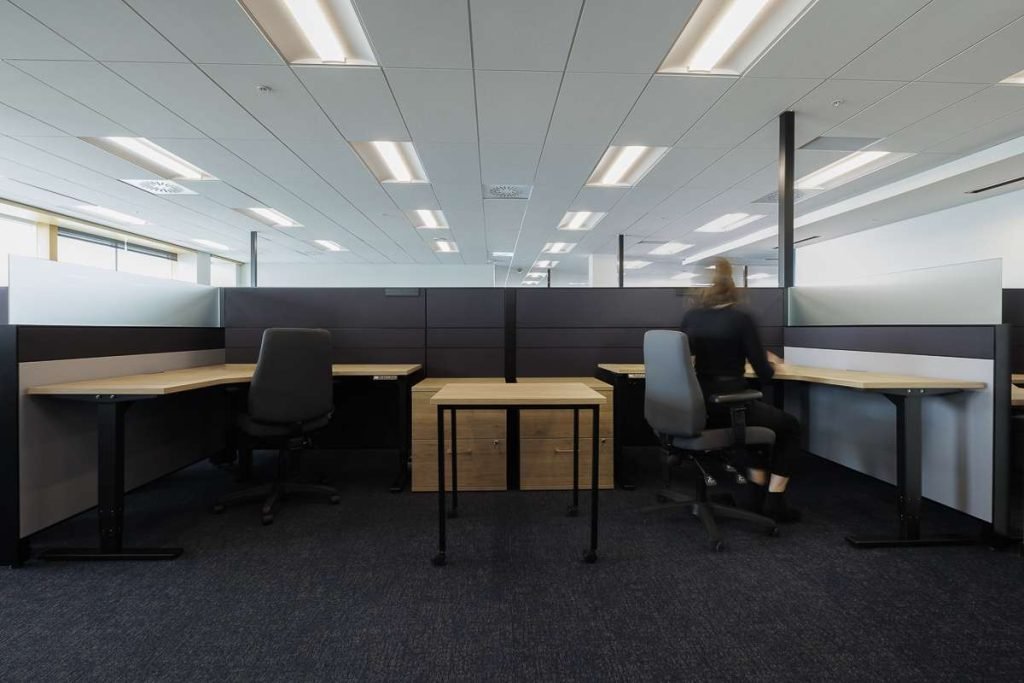
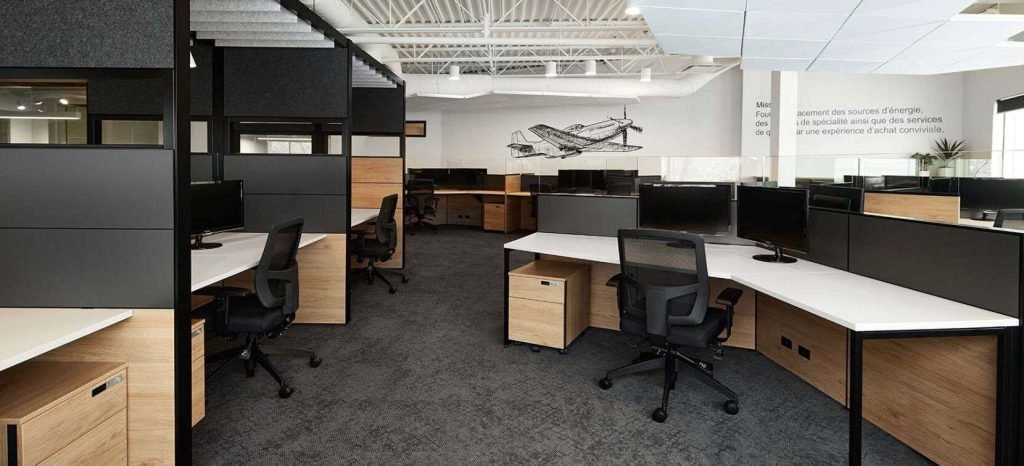
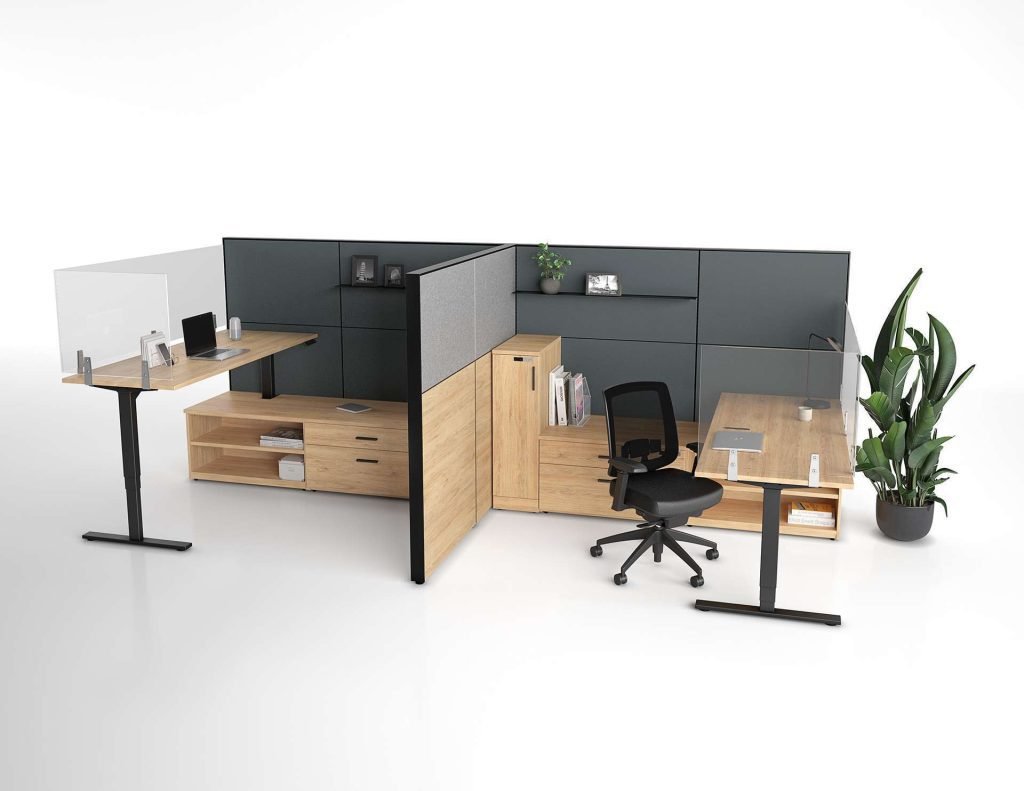
Buying office cubicles is one of those decisions that looks straightforward until you’re actually doing it. Size, height, material, layout configuration, panel systems, pricing tiers, new vs. used, there are more variables than most office managers expect, and the wrong call can mean a layout that doesn’t work, a furniture budget that blows past projections, or cubicles you’re stuck moving at lease end.
Our team at Interior Avenue has installed over 1,833 desks and 26,923 chairs across Phoenix-area commercial offices in Gilbert, Chandler, Mesa, Tempe, and the East Valley. This guide covers everything you need to make the right cubicle decision for your space, including an option most guides skip entirely: subscribing to cubicles instead of buying them.

Step 1: Know What You’re Actually Buying
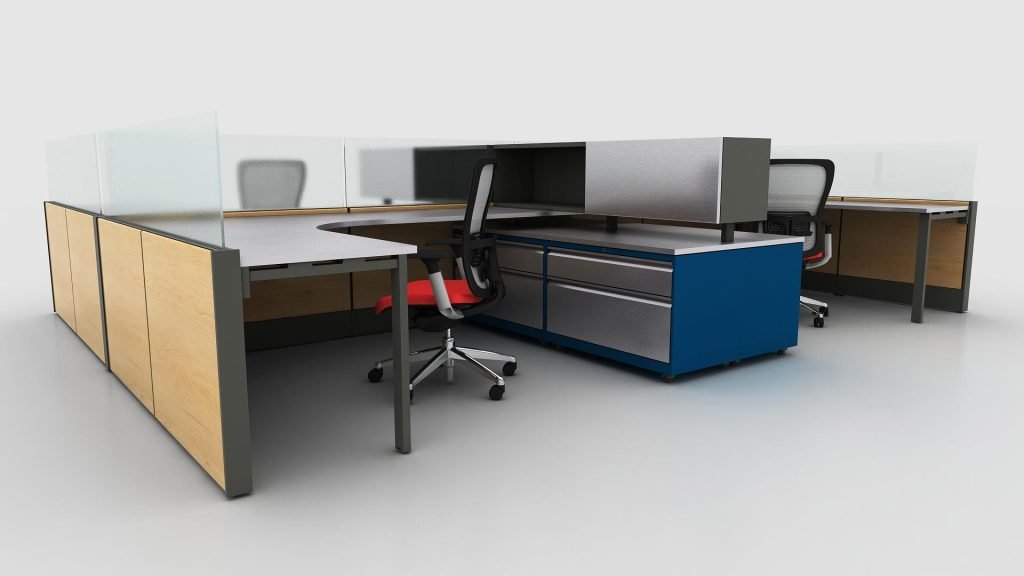
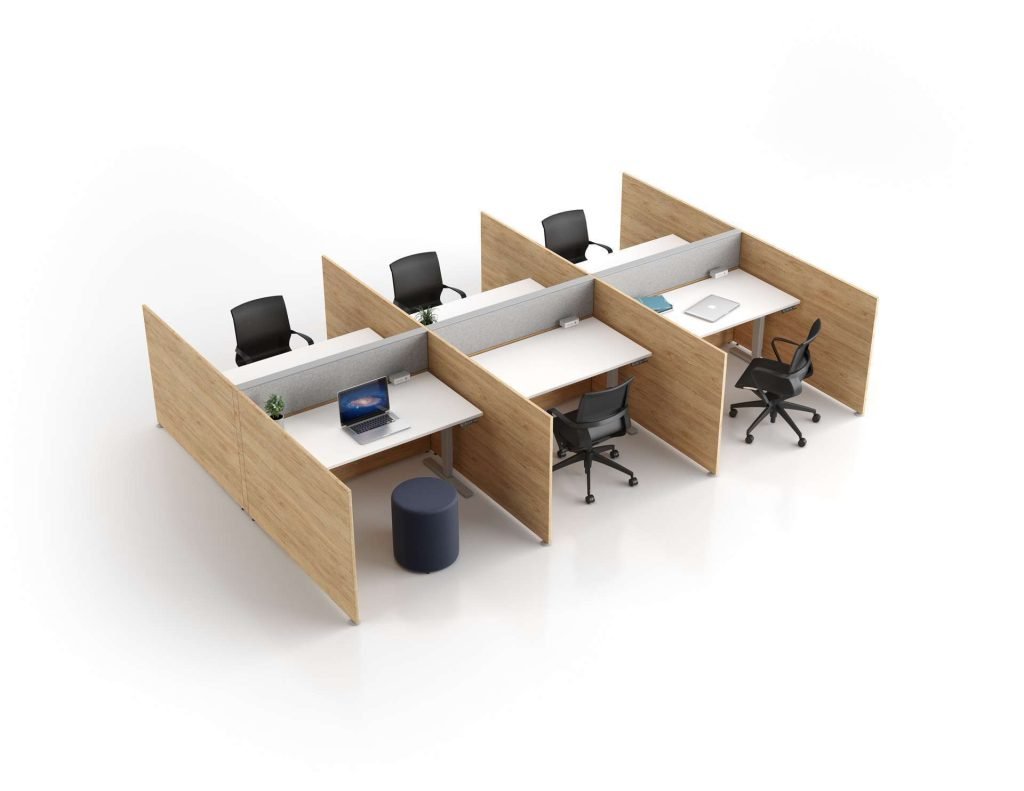
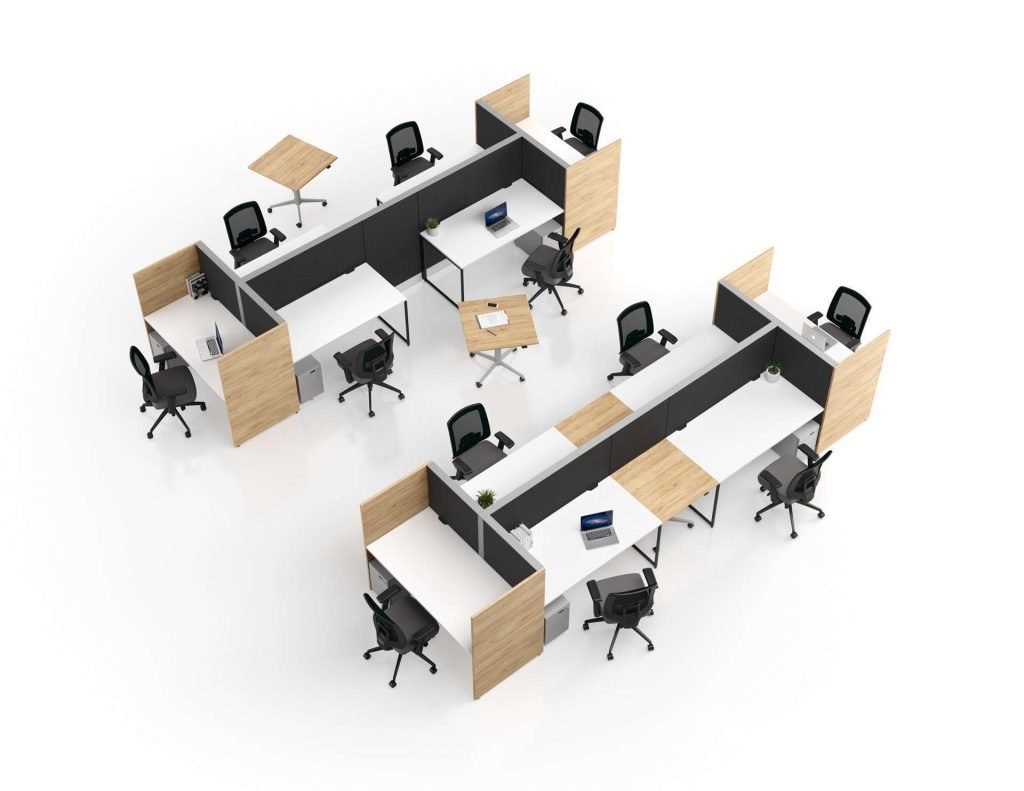
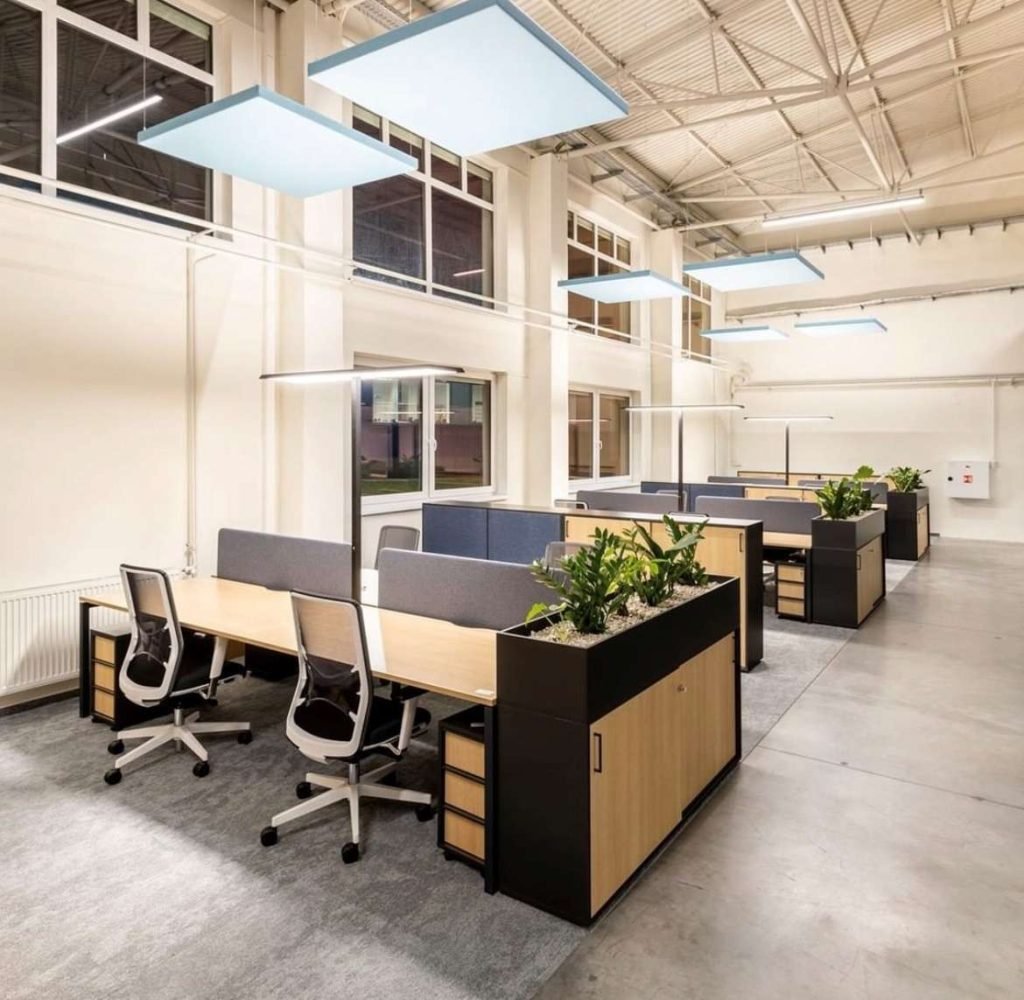
“Cubicle” is a broad term. In practice, Phoenix offices use three distinct workstation configurations, and they have meaningfully different costs, footprints, and collaboration profiles.
The Three Main Types of Office Workstation Systems
| Type | Description | Privacy Level | Best For |
|---|---|---|---|
| Call Center Cubicles | Individual enclosed units with panels on three or four sides | High | Customer service, finance, legal, focused individual work |
| Benching Systems | Open shared desk surfaces, sometimes with low dividers | Low–Medium | Collaborative teams, hybrid schedules, high-density layouts |
| Team Desking / Pod Systems | Individual pods grouped in clusters, often with medium dividers | Medium | Mixed-use teams needing both focus time and collaboration |
Which type do Phoenix offices use most? Based on what we’re seeing in the East Valley, benching and team pod systems have become the default for companies under 50 people, particularly those on hybrid schedules where not everyone is in on the same day. Traditional call-center-style cubicles remain common in contact centers, financial services firms, and any environment where acoustic privacy is a daily requirement.
Step 2: Understand Cubicle Sizes and Heights
After choosing a configuration type, size is the next decision, and it’s where most buyers underestimate the planning required. Cubicle dimensions affect not just individual workspace comfort but total headcount capacity, aisle widths, code compliance, and how many square feet per person your layout consumes.
Standard Cubicle Footprints
| Size | Typical Use | Notes |
|---|---|---|
| 4′ × 2′ and 5′ × 2′ | Call center environments | Minimum individual space; high density |
| 6′ × 6′ | Standard office workstation | Most common; suits one monitor and moderate storage |
| 8′ × 8′ | Senior staff or multi-monitor setups | Allows L-shaped desk configuration |
| 9′ × 12′ | Private office-equivalent | Usually enclosed; sometimes includes a door |
Space planning rule of thumb: In Phoenix offices we work with, 6′ × 6′ cubicles in a standard layout consume approximately 100–120 sq ft per employee when you factor in circulation aisles and shared areas. For a 3,000 sq ft office, plan for 20–25 workstations at that density.
Cubicle Panel Heights
Panel height is one of the most consequential decisions in a cubicle purchase; it determines the privacy and acoustic profile of your entire office.
| Height | Measurement | Visibility When Seated | Visibility When Standing | Best For |
|---|---|---|---|---|
| Low | 41″ | Other workers visible | Fully visible | Collaborative, high-energy environments |
| Medium | 53″ | Some privacy when seated | Still visible | Balanced offices; most common choice |
| High | 65″ | Full seated privacy | Not visible | Privacy-focused work; noise reduction |
| Enclosed | 82.5″ | Complete privacy | Complete privacy | Maximum isolation; call centers, legal, finance |
Our most common recommendation for Phoenix hybrid offices: Medium-height panels (53″) for open floor areas, with one or two enclosed or high-panel sections for employees who need sustained focus. This approach gives the floor an open feel while giving employees a genuine privacy option.
Step 3: Choose Your Materials
Cubicle panel materials affect durability, acoustics, aesthetics, and cost. Here’s how the main options compare:
| Material | Acoustic Performance | Durability | Cost | Best For |
|---|---|---|---|---|
| Fabric / Tackboard | Good — absorbs sound | Medium | $$ | Traditional offices; employee personalization |
| Metal / Laminate | Lower — reflects sound | High | $ | High-wear environments; easy cleaning |
| Glass / Acrylic | Poor — reflects sound | Medium-High | $$$ | Design-forward offices; doesn’t add privacy |
| Combination | Good — varies by design | High | Modern offices balancing aesthetics and function |
What we see in Phoenix installations: Fabric panel systems remain the most installed in traditional office environments. Laminate and metal systems are increasingly common in tech and healthcare offices where durability and cleanability matter more than acoustics. Full or partial glass panels are popular in client-facing offices, law firms, financial advisory, and architecture studios, where the aesthetic is part of the brand.

Step 4: Privacy vs. Collaboration, Matching Layout to Work Style
This is the decision most buyers get wrong. The temptation is to choose a layout based on what the office looks like rather than how work actually happens inside it.
High-privacy layout (call center or enclosed cubicles): Right for environments where employees spend most of the day on calls, handling sensitive information, or needing sustained concentration. Financial services, medical billing, legal support, and customer service teams typically fall here.
Open benching or low-panel layout: Right for teams that collaborate constantly, marketing, creative, product, and engineering teams with strong cross-functional work patterns. Works best when paired with separate enclosed spaces (conference rooms, phone booth pods) for calls and private conversations.
Mixed layout (the most common Phoenix scenario): Most offices aren’t purely one or the other. A combination approach, medium-height panels for general workstations, enclosed sections near windows or walls for focus work, and open benching in collaboration zones, gives employees agency over their environment. This is what we typically recommend and install.
A note from our installations: The biggest layout mistakes we see are open-plan offices that provide no acoustic relief, and fully enclosed cubicle farms that kill any sense of energy or collaboration. The best offices we’ve set up in Gilbert and Chandler tend to use medium-panel workstations as the default, with 1–2 phone booth pods for calls and a short-panel collaboration zone near the kitchen or common area.
Need help planning your cubicle layout? We offer free space planning and 3D renderings →
Step 5: Pricing, What Office Cubicles Actually Cost
Cubicle pricing varies significantly by type, materials, and configuration. Here’s a realistic range based on current market pricing:
| Configuration | Price Range Per Station | Notes |
|---|---|---|
| Call center cubicle (4′×2′, fabric) | $400–$800 | Entry-level; basic acoustics |
| Standard cubicle (6′×6′, fabric) | $800–$1,800 | Most common office workstation |
| Premium cubicle (6′×6′, fabric + glass) | $1,500–$3,000 | Better aesthetics; partial glass panels |
| L-shaped / 8′×8′ workstation | $1,200–$2,500 | More desktop space; storage options |
| Enclosed high-panel cubicle (9′×12′) | $2,000–$5,000+ | Maximum privacy; near private-office quality |
| Benching system (per person) | $500–$1,200 | Shared surface; lower panel costs |
Installation costs: Professional installation typically adds 15–25% to the furniture cost. For a 20-station office in Phoenix, budget $3,000–$6,000 for installation, depending on configuration complexity. Interior Avenue’s Easy Spaces subscription includes installation at no separate charge.
Total budget planning example: A 20-person Phoenix office with standard 6′×6′ cubicles (fabric, medium panels) typically runs $16,000–$36,000 in furniture plus $3,000–$6,000 installation, call it $20,000–$42,000 fully installed. Subscription pricing for the same setup through Easy Spaces starts from approximately $800–$1,200/month with no upfront cost.

Step 6: New vs. Used Cubicles
Used cubicles can appear to save 40–60% upfront. In our experience, the actual savings are often much smaller, and sometimes negative, when you account for:
Missing or non-matching parts. Used cubicle systems were designed to configure as a system. When pieces are missing or sourced from different lots, panels don’t align, and you end up paying for fabrication or workarounds.
No warranty. New cubicles typically carry 5–12-year manufacturer warranties. Used cubicles have none. Any defect, failure, or wear issue becomes your cost.
Obsolete hardware. Older cubicle systems may use discontinued connectors, brackets, and power management hardware. Adding a station later means hunting for compatible parts.
Hidden reconfiguration costs. Used cubicles arrive in the previous owner’s configuration. Adapting them to your floor plan often requires professional disassembly and reassembly, which can run nearly as much as a new installation.
Our recommendation: For Phoenix offices on leases of 5+ years who are confident in their headcount, high-quality new cubicles are worth the investment. For offices on 3-year leases or with variable headcount, a furniture subscription eliminates the new-vs-used question entirely, you’re not buying anything.
Step 7: Buy vs. Subscribe, The Option Most Cubicle Guides Skip
Most cubicle buying guides are written by furniture dealers who want you to purchase. Interior Avenue also offers something different: a monthly subscription that covers your entire workstation setup, desks, chairs, cubicle-style workstations, and more, with no upfront cost, professional installation, and free removal at lease end.
When Buying Makes Sense
- Lease term of 5+ years
- Stable, predictable headcount
- Capital available and not competed against growth investment
- You want to own and potentially move furniture to your next space
When Subscribing Makes More Sense
- Lease term under 5 years (very common in today’s Phoenix market)
- Headcount expected to change by 15%+ during the lease
- Capital should be better deployed toward hiring or operations
- You don’t want to manage furniture disposal at lease end
The math for a 3-year lease: Buying 20 workstations at $1,200 each = $24,000 + $4,000 installation = $28,000 upfront. Subscribing at ~$900/month × 36 months = $32,400 total, but with $0 upfront, no disposal costs, no maintenance liability, and no capital removed from operations at the start of the lease. For most Phoenix startups and growing businesses, that tradeoff favors subscribing.
Compare buy vs. subscribe pricing for your office →
Learn more about the OpEx vs. CapEx decision →

Step 8: What to Look for in a Phoenix Cubicle Provider
Whether you’re buying or subscribing, the vendor relationship matters. Here’s what to evaluate:
Space planning support. Any provider worth working with will help you plan your layout before you commit, floor plan review, density calculations, and ideally 3D renderings so you can see the finished product before it ships. Interior Avenue provides this at no charge.
Installation expertise. Cubicle installation is not furniture assembly. Panel alignment, leveling, power management integration, and configuration sequencing require experienced installers. Ask providers how many installations they’ve completed and whether installation is included or quoted separately.
Local service and support. For a Phoenix office, working with an East Valley-based provider means faster response times, local delivery coordination, and a team that knows the Phoenix commercial building landscape. Interior Avenue is based in Gilbert and serves the entire Phoenix metro.
Flexibility to reconfigure. Growing companies need to add stations. Confirm your provider can source matching panels and hardware for additions and reconfigurations without requiring a full replacement.
Proof points. Ask how many installations they’ve completed, what types of offices they’ve worked in, and whether they can show examples of their work. Interior Avenue has installed over 26,923 chairs and 1,833+ desks across Phoenix-area commercial offices. We’re happy to share specifics.
Frequently Asked Questions: Buying Office Cubicles in Phoenix
How much do office cubicles cost in Phoenix? Standard 6′ × 6′ office cubicles typically range from $800–$1,800 per station for fabric panel systems. Premium configurations with glass panels run $1,500–$3,000 per station. Enclosed high-panel systems (9′ × 12′) can reach $5,000 per station. Professional installation adds approximately 15–25% to furniture costs. Interior Avenue also offers workstation subscriptions starting from approximately $800–$1,200/month for a 20-person Phoenix office with no upfront cost.
What is the most common cubicle size for Phoenix offices? The 6′ × 6′ footprint is the most widely installed standard in Phoenix commercial offices. It accommodates one or two monitors, provides moderate desk storage, and works with both medium and high panel heights. In hybrid offices where not everyone is in every day, we’re seeing more 5′ × 5′ configurations to increase station density.
How long do office cubicles last? Well-manufactured fabric-panel cubicles typically last 10–15 years before significant wear is visible. Metal and laminate systems can last longer. In practice, most Phoenix companies reconfigure or replace cubicles at lease renewal, every 3–7 years, before they reach the end of their functional life.
What is the difference between cubicles and benching systems? Traditional cubicles have individual enclosed panel systems with dedicated storage for each workstation. Benching systems are open shared surfaces, lower cost per station, higher density, and better for collaboration, but with less privacy and acoustic separation. Benching has grown in popularity with hybrid workplaces; traditional cubicles remain preferred for roles requiring sustained focus or confidential work.
Do I need permits to install office cubicles in Phoenix? Freestanding cubicle panel systems typically do not require permits in Phoenix commercial spaces; they’re treated as furniture, not construction. However, if panels are attached to walls, ceilings, or electrical systems, review this with your landlord and a local contractor. Interior Avenue’s installations are permit-free in all standard configurations.
Can I add cubicle stations later as my team grows? Yes, if your initial system is specced for expandability. Most modern cubicle systems use a panel-and-connector design that allows additions. The key is matching panel specifications, height, depth, fabric color, and connector hardware from your original order. Interior Avenue tracks client specifications for exactly this reason.
What panel height is right for my office? Medium (53″) panels are the most versatile choice for Phoenix mixed-use offices, they provide seated privacy while keeping the floor feeling open. High (65″) panels are right for environments requiring acoustic separation and visual privacy. Low (41″) panels suit fully collaborative environments but provide almost no privacy. We typically recommend a combination approach.
Is it better to buy or rent office cubicles? For leases under 5 years or offices with variable headcount, subscribing through Interior Avenue’s Easy Spaces program usually wins on total cost and flexibility. For long-term stable offices with available capital, buying quality new cubicles makes sense. The full comparison is in our OpEx vs. CapEx furniture guide.

Work With Interior Avenue’s Phoenix Team
Interior Avenue provides office cubicle and workstation solutions for Phoenix-area businesses — available for purchase or monthly subscription through our Easy Spaces program. We handle space planning, delivery, installation, and reconfiguration across Gilbert, Chandler, Mesa, Tempe, Scottsdale, and the broader Phoenix metro.
What we offer:
- Free space planning and 3D layout renderings
- Office cubicle and workstation purchase
- Easy Spaces monthly subscription, no upfront cost, includes installation and end-of-lease removal
- Professional installation by our experienced team (26,923+ chairs and 1,833+ desks installed)
- Tenant representation for Phoenix-area office leases
Request a free space plan and quote →
Jason Bowman is a CRE Tenant Rep Specialist and Founder of Interior Avenue, serving the Phoenix metro commercial office market. Interior Avenue’s Easy Spaces program provides office furniture subscriptions and cubicle workstation solutions for growing businesses across Gilbert, Chandler, Mesa, Tempe, and the East Valley.
Related Resources